Delivering 625,005 Seedlings by Drone to Remote Planting Blocks in the NGWT
Case Study – Cole Stinson, Stinson Aerial Services Inc.
In 2026, Stinson Aerial Services flew 625,005 tree seedlings to planters at two remote Northwest Territories blocks, the Behchokǫ̀ / Yellowknife Highway block and Wekweètì, for Let’s Plant Trees North and Tłı̨chǫ Nation. A DJI FlyCart 30 heavy-lift drone made 812 turns over 19 flying days, carrying 1,532 tree boxes from staging to the crews and flying the empty boxes back out.
Project at a glance
| Behchokǫ̀ / Yellowknife Hwy | Wekweètì | |
| Dates (2026) | June 15 to 23 | Aug 23 to Sep 3 |
| Flying days | 9 | 10 |
| Seedlings delivered | 283,125 | 341,880 |
| Tree boxes | 755 | 777 |
| Aircraft | DJI FlyCart 30 | |
| Client | Let’s Plant Trees North, working with Tłı̨chǫ Nation. | |
Why is it hard to get seedlings to remote northern planting blocks?
The season is short, delivery days are few, and the blocks are far from any road or trail. Before drones, stock moved by helicopter or on planters’ backs, and that was either very expensive or hard on the people walking that many trees in. A helicopter usually drops large caches in one spot, so planters walk back and forth between the cache and their line. Late stock, a long walk from the cache, and slips, trips and falls all cost planters time.
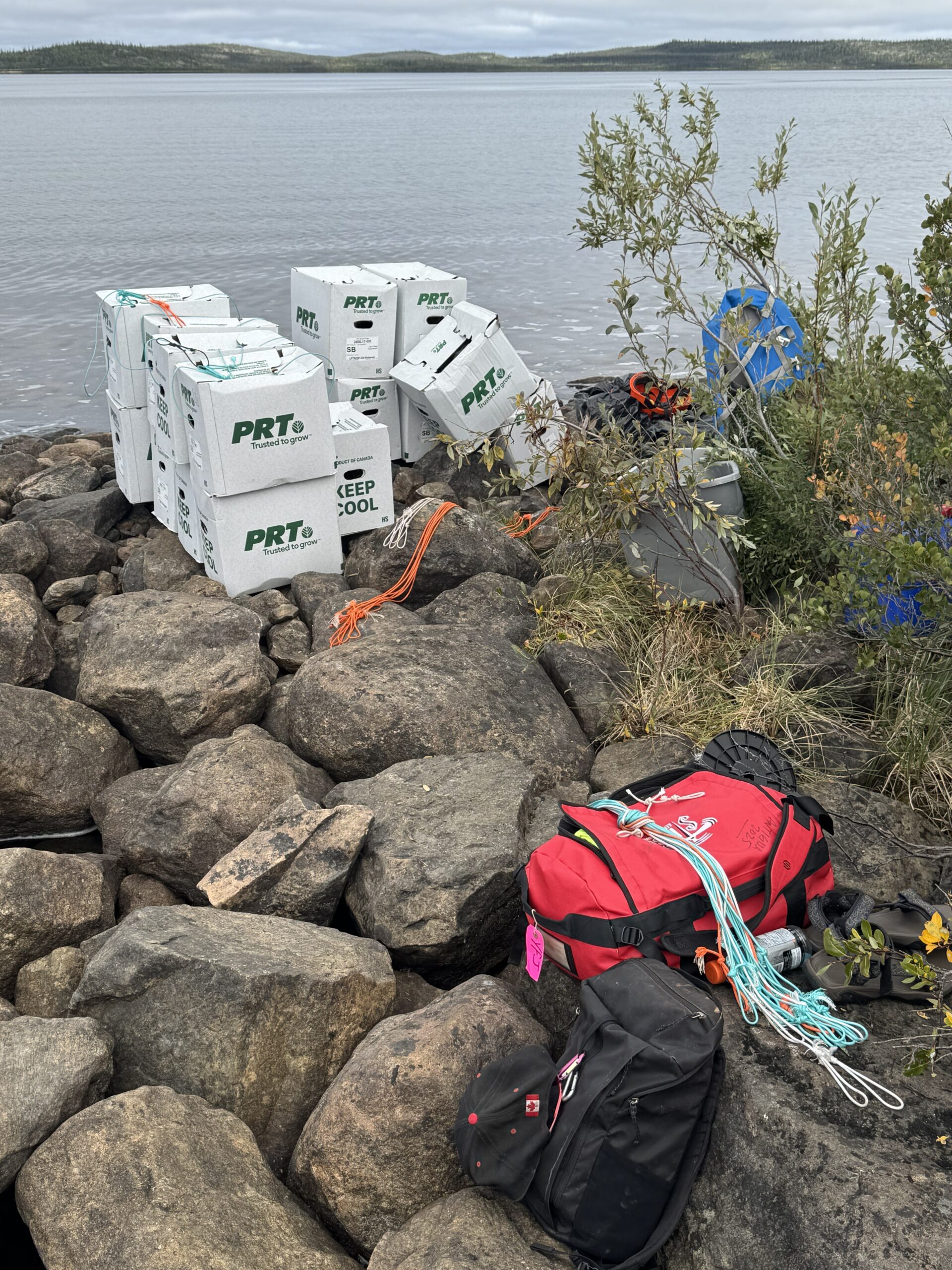
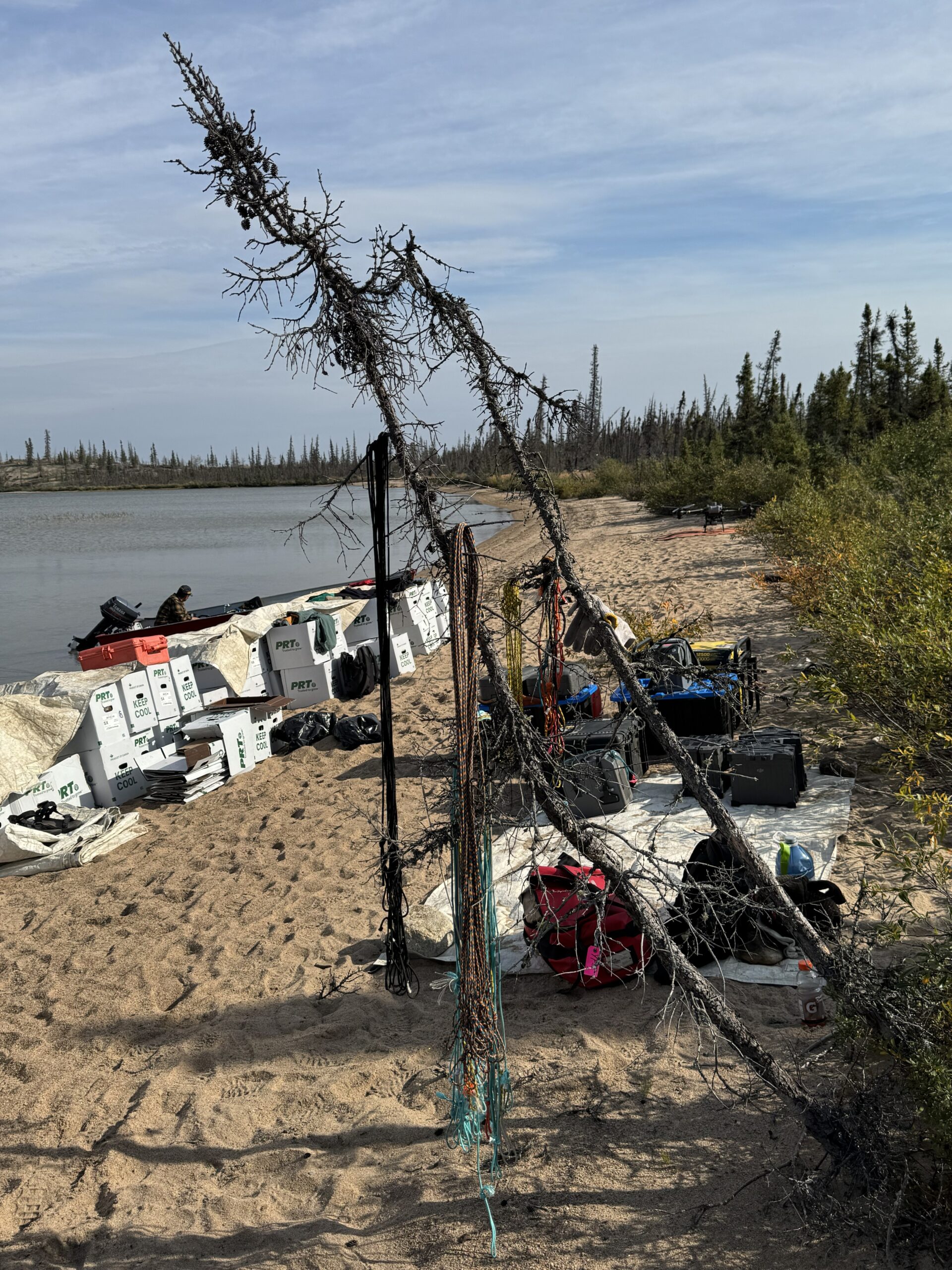
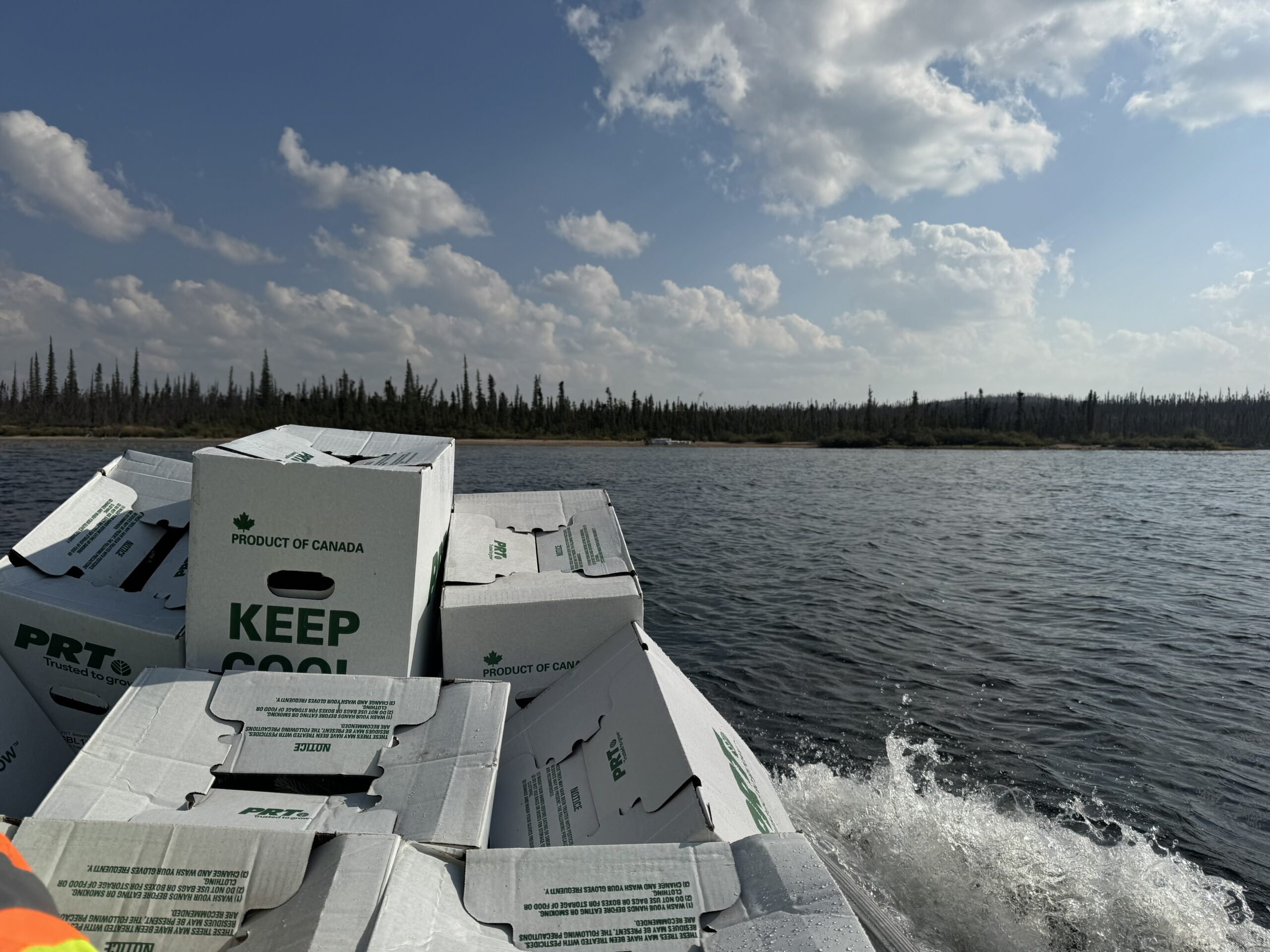
At Wekweètì, stock came in by boat to the beach and was staged on the shoreline. At Behchokǫ̀, the crew set up at a roadside pad.
How did SAS deliver seedlings by heavy-lift drone?
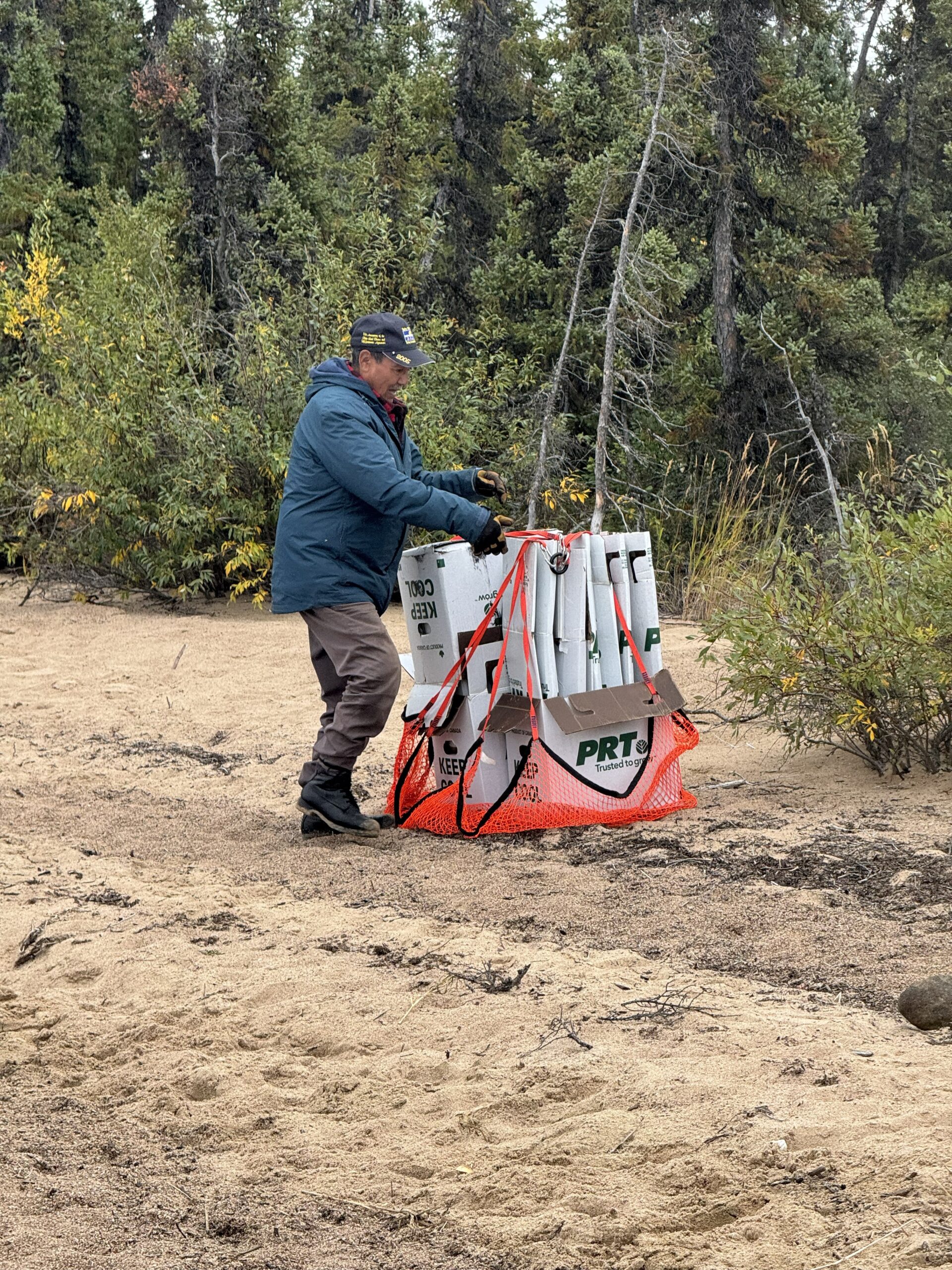
The idea is simple: the drone sets boxes of two down along each planter’s line, so fresh trees are there when they run out, and flies the garbage and empty boxes out at the end. Each sortie follows five steps.
-
- Boxes arrive at the cache or landing zone.
- The load master rigs the boxes and checks the payload.
- The drone flies a planned route to the drop point.
- Boxes are set down where planters need them.
- Waste and empty boxes are flown out.
Crew and safety
Each crew has a load master, a pilot and observers. The team briefs daily with the contractor, shares the drop plan with crew bosses, and runs a radio protocol with camp and crews. SAS also deconflicts with crewed aircraft. Flying stops on load swing, gusts above limits, battery reserve, or loss of link or visual.
What were the results?
Across both blocks the drone averaged about 1.9 tree boxes per turn and about 9 turns per flight hour.
| Behchokǫ̀ / Yellowknife Hwy | Wekweètì | NWT total | |
| Flying days | 9 | 10 | 19 |
| Seedlings delivered | 283,125 | 341,880 | 625,005 |
| Tree boxes | 755 | 777 | 1,532 |
| Turns flown | 409 | 403 | 812 |
| Average yarding distance | ~1,020 m (up to 2,000 m) | ~900 m (up to 1,200 m) | ~960 m |
| Production flight hours | 44.2 | 44.2 | 88.4 |
| Retrieval, ferry and clean-up hours | 15.5 | 18.3 | 33.8 |
| Turns per flight hour | 9.3 | 9.1 | 9.2 |
Both blocks took the same 44.2 production flight hours, and Wekweètì moved more seedlings in that time. The project wrapped up a few days early, which saved camp and employee costs.
What does this mean for forestry and remote communities?
Planters get fresh stock on their own line instead of walking back to a cache, and the same aircraft carries the garbage out. The blocks were far from any road or trail, so the lift does the work that crews on foot or a helicopter would otherwise do.
The blocks had been affected by wildfire. Planting them helps jump-start healing and green the ground up again, so animals can come back and the community can return to its natural cycle of life.
Seen in a sensitive-ground setting, the same method is covered in our Burns Bog case study.
FAQ
How do drones deliver tree seedlings to remote planting blocks?
A heavy-lift drone flies boxes of seedlings from a staging area straight to the planters, then flies empty boxes and waste back out. In the Northwest Territories in 2026, SAS made 812 turns this way, carrying about two tree boxes per turn.
How much can a heavy-lift drone carry?
The DJI FlyCart 30 carries 30 to 40 kg. In this project it averaged 1.9 tree boxes per turn over the season, at about 9 turns per flight hour.
How far can the drone fly with a load?
The FlyCart 30 has a range of 16 km with a 30 kg load. On the NWT blocks the average yarding distance was about 1 km, with flights up to 2,000 m at Behchokǫ̀ and 1,200 m at Wekweètì.
Is it safe to fly drones over tree planters?
SAS keeps drop zones clear of active planting, plans routes around crews, controls access at the pad and staging area, and lowers loads on a long line. Crew bosses get the drop plan, a radio protocol links camp and crews, and flying stops on load instability, gusts above limits, low battery reserve, or loss of link or visual.
How is drone seedling delivery different from using a helicopter?
A helicopter usually drops large caches in one spot, so planters walk back and forth to reach them. The drone drops boxes of two along each planter’s line so fresh trees are there when they run out, and it can fly the garbage out at the end.
Planning a remote lift?
Contact Stinson Aerial Services: Tim Stinson, Managing Director, [email protected], 250-897-5531, or use the contact form. See our heavy-lift drone services, our pilot training, and about SAS.